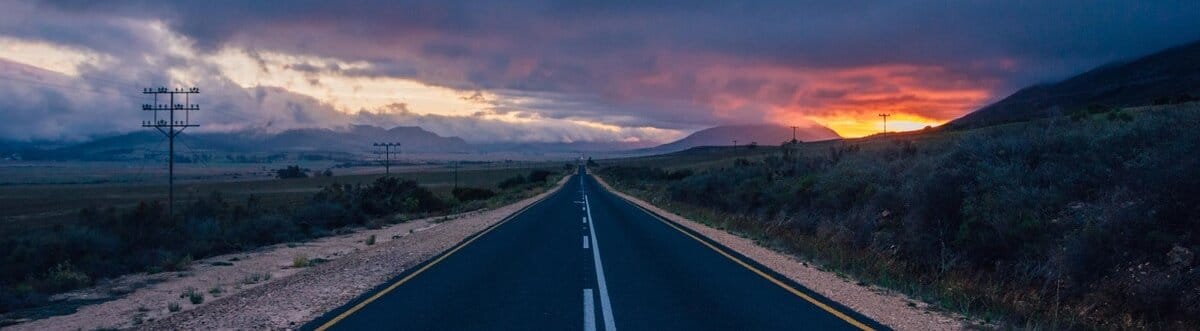
Few people suspect that Namaqualand has quite a few historic passes. Some background and history to the ones we travelled so far. Darter’s Poort The poort isn’t really a pass in the engineering sense of the word but does however have significant historical value as it is named after a British sharpshooter, Lt. Charles James…
Read moreCategory: History
Historical places and people
The route between Pofadder and Kamieskroon
The route between Pofadder and Kamieskroon is probably not on many peoples’ list of must-see must-do routes, but it is actually scenic in its own special way. Aggeneys Aggeneys was founded to service the Black Mountain Mine, an underground base-metal operation. No-one is quite certain of the origin of the name Aggeneys. It is possibly…
Read moreThe route between Kuruman and Pofadder
The route between Kuruman and Pofadder passes through an arid area except for the lush areas along the Orange River, with a beauty all of its own. Kathu is the iron ore capital of the Northern Cape province. Its name means “town under the trees”, after the Camel Thorn forest it is situated in. The…
Read moreThe route between Irene and Kuruman
The route between Irene and Kuruman passes through an area rich in colonial history. These are some of the places on or close to the route with its root’s in the history of South Africa. Ventersdorp grew around a Dutch Reformed Church that was established in 1866. It was named after Johannes Venter who owned…
Read moreIrene Concentration Camp
The Irene concentration camp was opened on 2 November 1900. The population of the camp increased rapidly and refugees were housed in tents under extremely poor conditions. Often hundreds of families would be ‘dumped’ by train at the camp, sometimes without prior arrangements to provide for their arrival. The only possessions these people had were…
Read moreJan Smuts House Museum
The land on which the house is now situated was previously owned by Michiel Christiaan, son of Voortrekker Daniel Elardus Erasmus, who subdivided his farm between his three sons. It was bought by Jan Smuts in 1908 for £900. Twelve squatter families were inhabiting the property in 1908 and remained for a few years. Smuts…
Read more